COVID stay-at-home measures changed how we spend our time. Keywords like “time at home” and “stay home” spread across social media, and new demand emerged around how to spend time indoors.
Here we look at three categories whose sales grew, largely driven by social media, during that shift, along with the trends and hashtags behind them. They should serve as useful hints when planning your own SNS campaigns.
1. Cooking: The Demand Created by #OuchiCafe
With people spending far more time at home due to stay-at-home requests, more of them are cooking elaborate dishes they would not normally attempt.
Another reason for the boom: when the state of emergency was declared, restaurants and other dining establishments suspended business, so people began preparing stylish dishes that gave them the feeling of eating out, then posting the photos to SNS. Hashtags like “#OuchiCafe” (home cafe) took off as a result.
“#OuchiCafe” enjoys broad popularity, from young people to homemakers, with the total number of posts under the hashtag on Instagram surpassing 4,000,000. Many influencers and celebrities have joined in as well, and it looks set to remain at the center of domestic trends.
There are also cases where coffee shops saw sales surge thanks to the home cafe boom and the rapid rise of remote work.
R.O.STAR
Driven by the rapid rise of remote work and the home cafe boom, in-store coffee sales rose, growing more than fivefold.
Demand for food delivery services such as “Uber Eats” also increased, with coupons and campaigns available to those who shared on SNS. Instagram even launched a service that lets users place Uber Eats orders from within the app, so its user base is sure to keep growing.
Source: nonpi Inc., R.O.STAR
From this PR TIMES article
2. Exercise: Attention on At-Home Workouts
Unable to go out and move around, people are showing a heightened awareness of their health. During the self-restraint period in April and May, gyms and fitness facilities closed and going outside was discouraged, so more people began stretching and doing strength training at home. As a result, exercises that are easy to do at home have grown popular. Some SNS accounts have even launched online exercise classes, and several are starting to attract attention.
LEANBODY
LEAN BODY is a monthly subscription service that streams fitness and exercise videos. Because the content is on-demand, there are no fixed times, and users can take any lesson they like whenever they like. Since April, it has offered the exclusive streaming of “Billy’s Boot Camp,” drawing customers with the promise of being able to work out at home anytime. It currently has more than 180,000 followers on Instagram.
Source: LEAN BODY, Inc.
Rising Demand Seen Through Google
In reality, many SNS accounts and blog articles have been introducing stretching routines under the “time at home” theme, and on Google Trends, searches for words like “fitness” spiked sharply, especially around the time the state of emergency was declared.
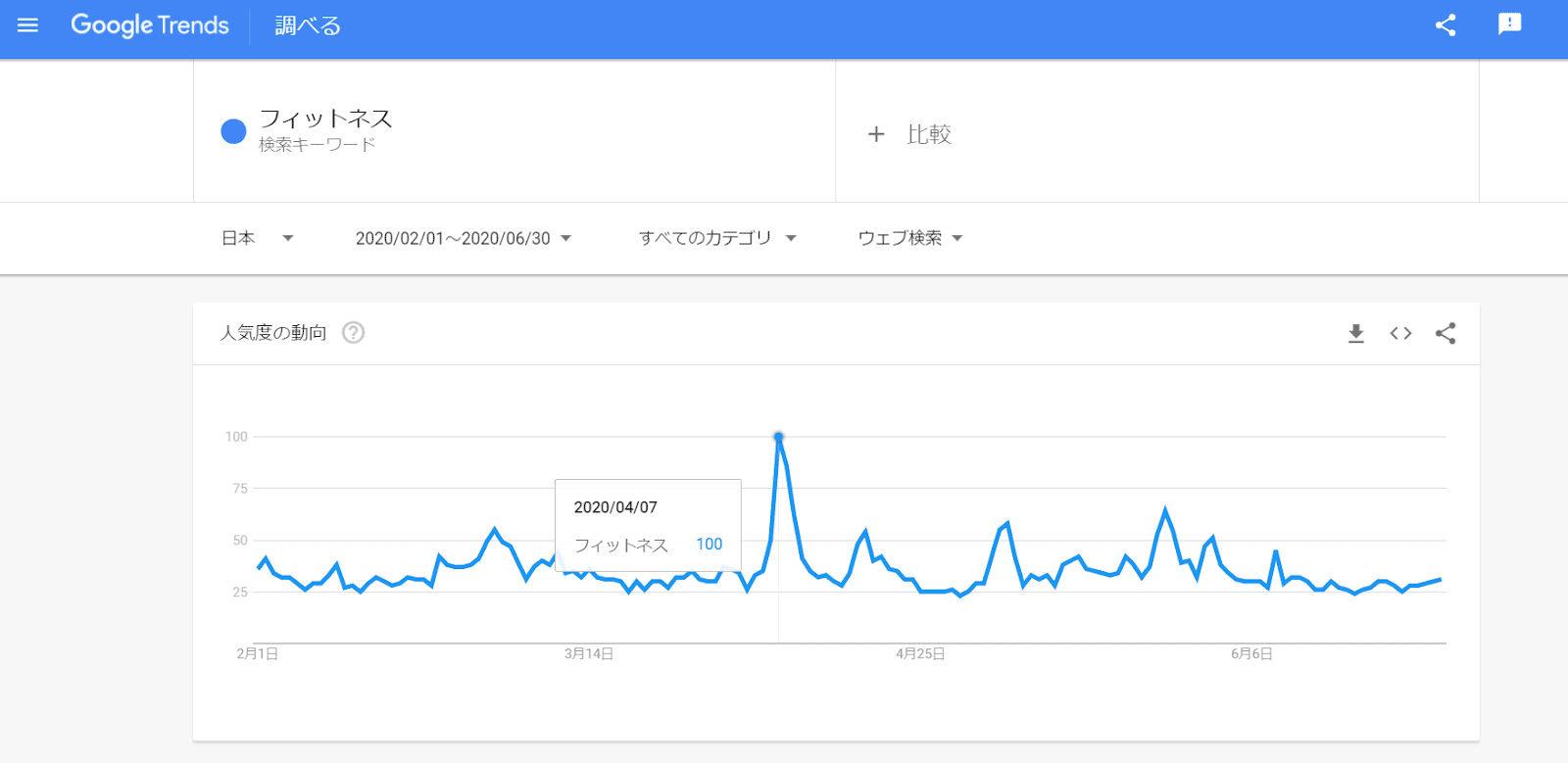
*Google Trends search results for “fitness”
Sales of strength-training gear also rose. According to a survey by Plus Alpha Consulting, the number one item people purchased during the self-restraint period in April and May was “strength-training gear.”
Source: From a Plus Alpha Consulting / Mieruka Engine news article
Instagram’s New “Guides” Feature
Instagram is set to add a new “Guides feature.” Guides let you create something like a blog post by combining your posted photos and videos with text, then share it. The Guides you create can be viewed from your profile, just like feed posts.
Instagram has said it will first roll out the Guides feature with a focus on the health genre.
Reference: Official Instagram Blog
If you plan to share new health-promoting exercise content on Instagram going forward, creating Guides that weave together videos and images may let you present it in a clearer, more accessible way.
With demand for exercise rising amid the spread of the coronavirus, now is a major opportunity to attract customers. And because exercise is most meaningful when sustained, many people keep up their workouts and strength training over time. Once things return to normal after the pandemic, it may pay off to run ongoing campaigns that make it easy to win repeat customers, or to offer prizes for staying consistent over a set period, in order to drive engagement. To secure customers down the line, taking advantage of the current pandemic situation to run customer-acquisition campaigns will likely prove very important.
3. Games: Buzz Centered on Animal Crossing: New Horizons
With schools closed, more parents are buying games for their children, and more people are turning to games to fill their free time. Among them, “Animal Crossing: New Horizons,” released by Nintendo on March 20, has been an immense hit, selling over 1,000,000 copies in its first three days and rising to become the second best-selling Nintendo Switch title of all time.
Animal Crossing: New Horizons
With people spending more time at home due to stay-at-home requests, the game’s appeal, going out, shopping, and, true to its title, gathering and playing with friends, all in a virtual space, seems to have driven the recent surge in demand.
On Twitter, “#AnimalCrossing” and other related terms trended even before the game’s release, and after launch, many people posted gameplay videos and screenshots that spread widely.
Apparel brands and even an American art museum joined Animal Crossing, running campaigns to distribute their own original in-game items. On Instagram, a popular overseas apparel brand created new outfits within the game and posted them, earning nearly 20,000 “likes.”
Source: Nintendo Co., Ltd. Animal Crossing: New Horizons
It is not just Animal Crossing: sales of video game software have surged across the board, with digital (download) versions in particular seeing sales rise more than 100% in the third week of March this year (March 16-22) in countries and regions placed under lockdown due to the coronavirus.
One contributing factor: in Europe and the Americas, 18 game-related companies launched a campaign in March called “#PlayApartTogether,” a project that encouraged people to stay home and play games. As part of it, they ran sales on their own titles and offered paid membership perks for free for a limited time.
In Japan, too, many game software companies and ordinary video creators ran hashtag campaigns and live-streamed on video services like YouTube, and gaming events canceled due to the coronavirus were held online, drawing large audiences.
Conclusion: The Drive to Make Time at Home Fulfilling Created Sales
In this article, we introduced three categories that saw rising sales amid the pandemic: cooking, exercise, and games. In every case, the common thread appears to be making the time spent at home more fulfilling.
During the self-restraint period after the state of emergency was declared, many people switched to remote work and online classes to avoid going out, so they ended up spending more time at home. As a result, they had to spend at home the time they would normally have spent outside, and for some, the inability to get out much became a source of stress. Exercise, cooking, and new games gained popularity, it seems, as people tried to make at least some of that time worthwhile.
And what powered that popularity was social media. As large numbers of people shared and spread content, each category drew more attention and grew in popularity. If you can harness SNS trends to capture popularity, it can translate into higher sales.
Turning SNS Trends into Customers
Incorporating content that is generating buzz on social media to spark conversation and drive engagement has become an important part of any SNS strategy. That said, many companies are unsure exactly what kind of campaign to run. How you tie trends to your own products, and how you design hashtags and campaigns, is what determines the results.