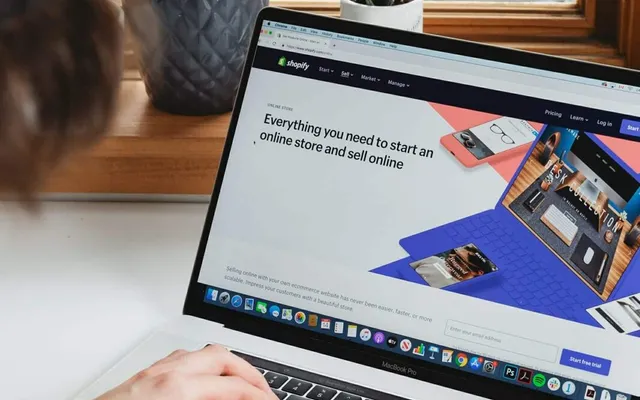

This May, the sales-channel integration between Shopify and Rakuten Ichiba launched. The news of a tie-up between the world’s most talked-about e-commerce platform and one of Japan’s largest marketplaces is a big deal. As a result, we can expect an influx of brands rarely seen on Rakuten before, along with the growing wave of D2C brands, and with it, broad expansion across Japan’s e-commerce sector as a whole.
In this article, we’ll take a detailed look, from an e-commerce seller’s perspective, at what this Shopify and Rakuten integration makes possible and the benefits it brings.
The benefits of the integration
1. Expanding your sales channels
The first benefit for Shopify users is, above all, “expanding your sales channels.” Many of the e-commerce stores built on Shopify today belong to the growing wave of D2C brands. There are also brands that have already opened a store but lacked the resources to manage another site, which kept them from selling on Rakuten Ichiba. On top of that, overseas brands planning to enter Japan via Rakuten Ichiba may simply not know how to open a store there.
By using Shopify, however, brands not yet on Rakuten Ichiba can open a Rakuten Ichiba store easily and widen their sales channels. For that reason, the number of brands selling on Rakuten Ichiba is expected to grow as well.
2. Unified data management
Beyond customer acquisition, the integration is also extremely convenient for inventory management. If you already have products listed on Rakuten, you will still need to register them on Shopify. But once you connect with Rakuten Ichiba, you can manage inventory in one place, so products registered in Shopify can be listed on Rakuten Ichiba automatically.
It isn’t just inventory data, sales data can be shared as well. Being able to manage sales in one place is convenient in itself, but because you can also see where each purchase came from, you can check what kinds of products sell well on your Shopify store versus on Rakuten Ichiba and put that data to work in your future marketing strategy. Integrating Shopify with Rakuten Ichiba delivers many benefits on the data-management front.
3. Benefits from the perspective of companies already on Rakuten Ichiba
There are several benefits for companies that already sell on Rakuten as well. Even if you’re selling on Rakuten or other major marketplaces, e-commerce malls like Rakuten Ichiba limit how far you can take your design, which makes it hard to fully express your brand image. You can make up for that drawback by building an original e-commerce store on Shopify, where there are no such design limits. By connecting the site you create to Rakuten Ichiba and selling through it, you can project your brand image while still selling on Rakuten Ichiba.
Points to keep in mind before integrating
There are a few things to keep in mind, though. All of the services above require enrollment in Shopify’s “Rakuten Ichiba option service.” Rakuten Ichiba’s data-management account is the “RMS account,” and only one such account can be linked per Shopify account. Also, as a rule, any products you registered on Rakuten Ichiba before connecting it to Shopify will need to be re-registered on Shopify manually.
That covers what becomes possible when you integrate Shopify with Rakuten Ichiba.
The benefits when building an e-commerce store from here on
The Shopify and Rakuten Ichiba integration benefits not only companies that already run a Shopify store or sell on Rakuten Ichiba, but also companies about to launch an e-commerce store. The biggest reason is that you can “open a site tailored to your brand while also reaching a large audience.”
When you create an e-commerce store for your own products, the first priority is getting users onto the site. The usual ways to do that are social media marketing and SEO. By integrating with Rakuten Ichiba, you can increase the number of people you draw in through on-site SEO and social media PR while also pitching to Rakuten members all at once. Rakuten already has more than 100 million members, and a great many of them use it to shop. Because the site offers rich search options, by genre, by keyword, by release date, by sales volume, and more, you can reach customers with high purchase intent.
Building an e-commerce store from scratch does cost money, however. That’s where Shopify comes in. Beyond the Rakuten Ichiba integration introduced above, Shopify comes with many design templates and system apps, so you can build an e-commerce store easily and at low cost.
For companies just starting to open an e-commerce store and for those that already have one, the Shopify and Rakuten Ichiba integration is set to become an important part of any sales strategy.
Summary
In this article, we introduced the benefits of the Shopify and Rakuten Ichiba integration. Pairing Rakuten Ichiba, which can reach a large audience, with Shopify, which lets you build a low-bounce site that fits your brand image, will be a major help in growing sales amid the e-commerce competition ahead. On top of that, the coronavirus is currently accelerating demand for online shopping as part of stay-at-home consumption.
Going forward, Shopify may integrate not only with Rakuten Ichiba but with other e-commerce sites as well. To pursue even greater sales expansion, it may be worth building your e-commerce store on Shopify now.